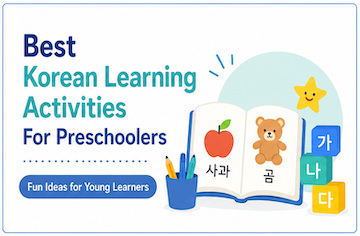
Teaching Korean to preschoolers works best when learning feels like play. Young children naturally learn through movement, songs, repetition, and hands-on activities. Making Korean enjoyable can help children stay interested and build positive learning habits.
Why Activities Matter for Preschoolers
- Children learn through play
- Repetition helps memory
- Movement keeps attention
- Fun activities reduce pressure
Five Korean Learning Activities for Preschoolers
1. Korean Alphabet Matching
Use cards with Korean letters and pictures so children can match sounds and images.
2. Korean Songs and Dance
Simple songs help children remember vocabulary and pronunciation naturally.
3. Coloring Activities
Children can color pictures while practicing Korean words.
4. Korean Bingo
Simple games can help children review vocabulary in an exciting way.
5. Story Time
Reading Korean picture books creates natural language exposure.
Real-Life Experience
While working with Korean school students, I often noticed that preschool children responded best when language learning felt like a game rather than a lesson.
Conclusion
Preschool children learn best through enjoyable experiences. Short activities and playful learning can help children build confidence and maintain interest in Korean.