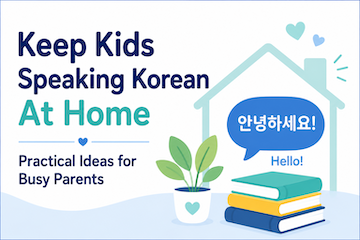
Many parents raising children in America worry that their children gradually stop speaking Korean at home. This is very common in bilingual families because children naturally begin using the language they hear most often. The good news is that small daily habits can make a big difference.
Why Maintaining Korean Matters
Keeping Korean at home is about more than language skills. It can help children:
- Communicate with family members
- Understand Korean culture
- Build a stronger identity
- Maintain bilingual abilities
Children do not need perfect grammar to benefit from using Korean regularly.
Five Practical Ways to Keep Kids Speaking Korean
1. Create Small Korean-Only Times
Choose a simple routine:
- During dinner
- During bedtime
- During car rides
Even ten minutes helps.
2. Read Korean Books Together
Picture books and simple stories can create natural exposure.
3. Use Korean During Everyday Activities
Simple phrases work well:
- Let’s eat.
- Put on your shoes.
- Good night.
4. Make Korean Fun
Children enjoy:
- Songs
- Games
- Matching activities
- Simple challenges
5. Be Consistent
Short daily practice often works better than occasional long lessons.
Real-Life Experience
While working with Korean school students, I often noticed that children who heard Korean naturally at home became more comfortable speaking over time. Families who used small daily routines often saw steady progress.
FAQ
What if my child answers in English?
Continue speaking Korean naturally without creating pressure.
How long should practice be?
Five to fifteen minutes every day can be effective.
Conclusion
Keeping Korean at home does not require long lessons. Small daily habits and enjoyable activities can help children maintain the language naturally.