
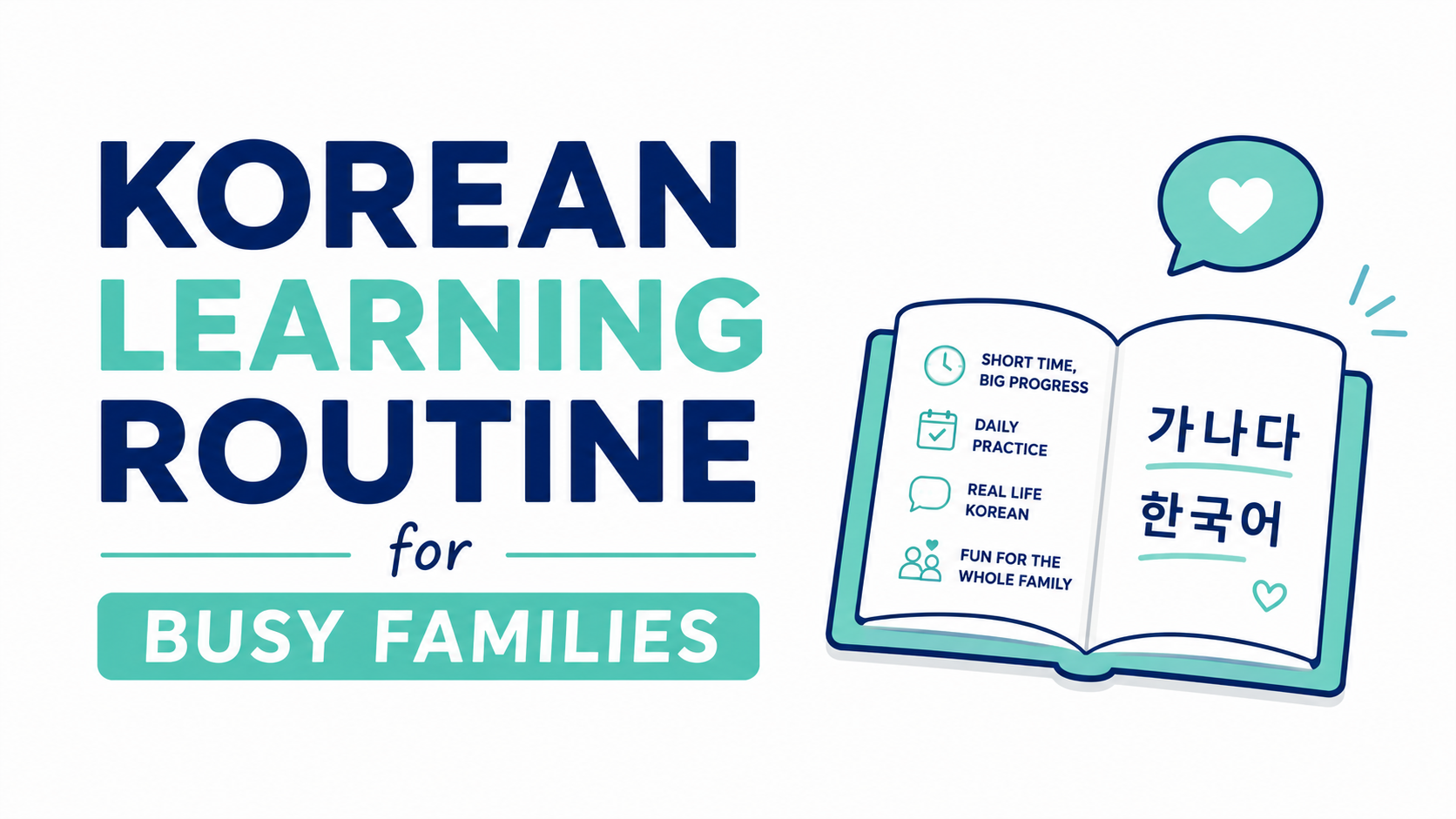
Many families want their children to learn Korean, but busy schedules can make it difficult. Between school, sports, homework, and family activities, finding extra time may seem impossible. However, small routines can create meaningful progress.
Why Daily Routines Matter
Daily habits can help children:
- Build consistency
- Remember vocabulary
- Feel comfortable using Korean
- Develop confidence
Small steps often create long-term results.
Five Simple Korean Learning Habits
1. Korean During Breakfast
Practice simple words and greetings.
2. Read for Five Minutes
Short reading sessions can build familiarity.
3. Use Korean in Daily Activities
Use Korean while cooking, driving, or playing.
4. Listen to Korean Songs
Music creates natural repetition.
5. Keep Learning Fun
Games and stories can reduce pressure.
Real-Life Experience
While working with Korean school students, I often noticed that families with small daily routines usually saw more progress than families relying only on weekly study sessions.
Conclusion
Busy families do not need long lessons. Small routines practiced consistently can create strong language habits.