
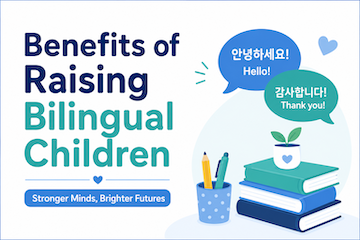
Raising bilingual children can provide many lifelong advantages. Parents often worry that learning two languages might confuse children, but research and real-life experiences suggest otherwise. Children can successfully learn multiple languages while developing valuable cognitive and social skills.
Why Bilingualism Matters
Children who grow up with two languages often gain more than language skills. Learning more than one language can support brain development and increase flexibility in thinking.
Benefits may include:
- Better problem-solving skills
- Increased cultural awareness
- Stronger communication abilities
- Greater future opportunities
Five Benefits of Raising Bilingual Children
1. Improved Cognitive Skills
Bilingual children often practice switching between languages, which can strengthen mental flexibility.
2. Stronger Connection to Family and Culture
Language helps children communicate with relatives and understand cultural traditions.
3. Increased Confidence
Children who become comfortable using two languages often gain confidence in communication.
4. Better Future Opportunities
Knowing multiple languages may create more educational and career opportunities later in life.
5. Greater Understanding of Different Perspectives
Children exposed to multiple languages often learn to appreciate different cultures and viewpoints.
Real-Life Experience
While working with Korean school students, I often noticed that children exposed to both English and Korean naturally adapted over time. Parents sometimes worried that children would become confused, but many students gradually became comfortable switching between languages in everyday situations.
FAQ
Can learning two languages confuse children?
Most children can learn multiple languages successfully when they receive regular exposure.
How much exposure is needed?
Even short daily interactions can help children build language habits.
Conclusion
Raising bilingual children offers benefits beyond learning vocabulary. Language can strengthen family connections, support cognitive development, and provide opportunities throughout life.
Related articles: